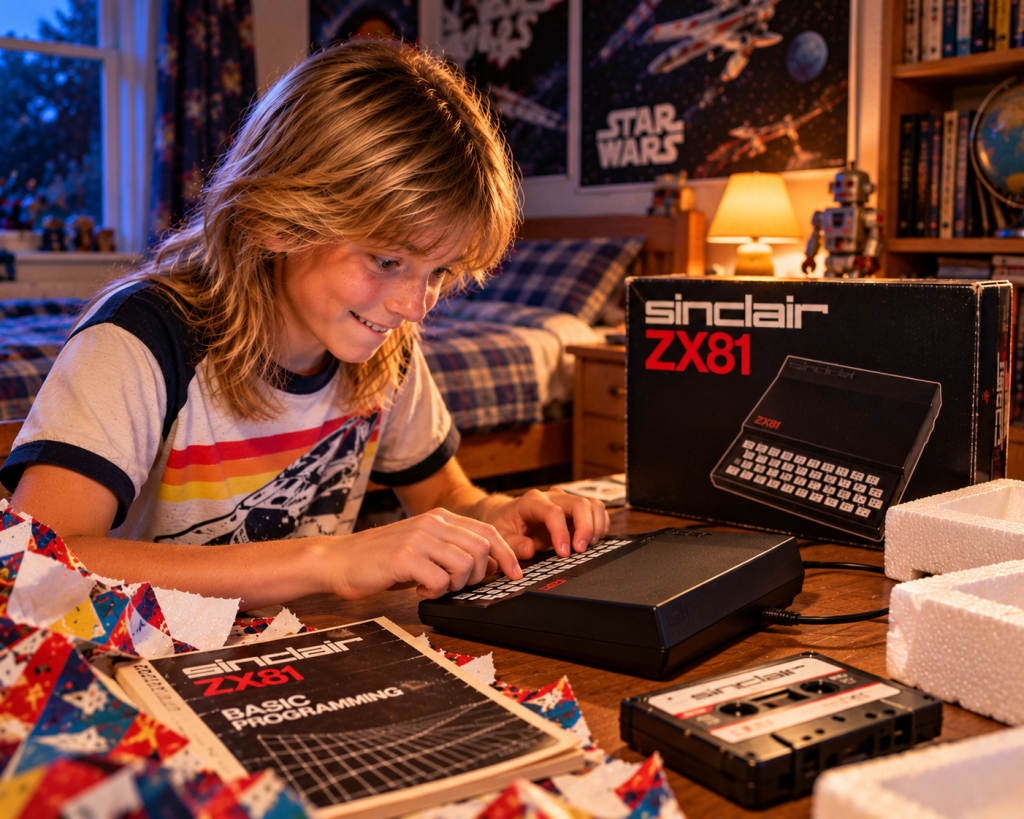
The Sinclair ZX81: One Kilobyte of Ambition
Imagine buying a computer with less memory than a modern digital watch needs to do something useful. Now imagine that you expect it to run programs, perform calculations, display information on your television and perhaps even help you build your own games.
Welcome to 1981.
The Sinclair ZX81 was one of those machines that helped turn home computing from an expensive hobby into something ordinary people could realistically aspire to own. It was small, inexpensive, cleverly engineered and, by modern standards, spectacularly limited. Yet it gave a generation of curious minds the opportunity to experiment with computers in their own homes.
For me, the story begins a little earlier. I desperately wanted the Sinclair ZX80, the machine that preceded it. But the ZX81 arrived in 1981 with an improved BASIC interpreter, more sophisticated mathematical capabilities and the ability to expand its memory. That made the newer machine an appealing prospect. The ZX80 may have caught my attention first, but the ZX81 was the machine that became part of my computing journey.
Looking back now, it’s remarkable to think how much potential was packed into such a modest little box.
What exactly was the ZX81?
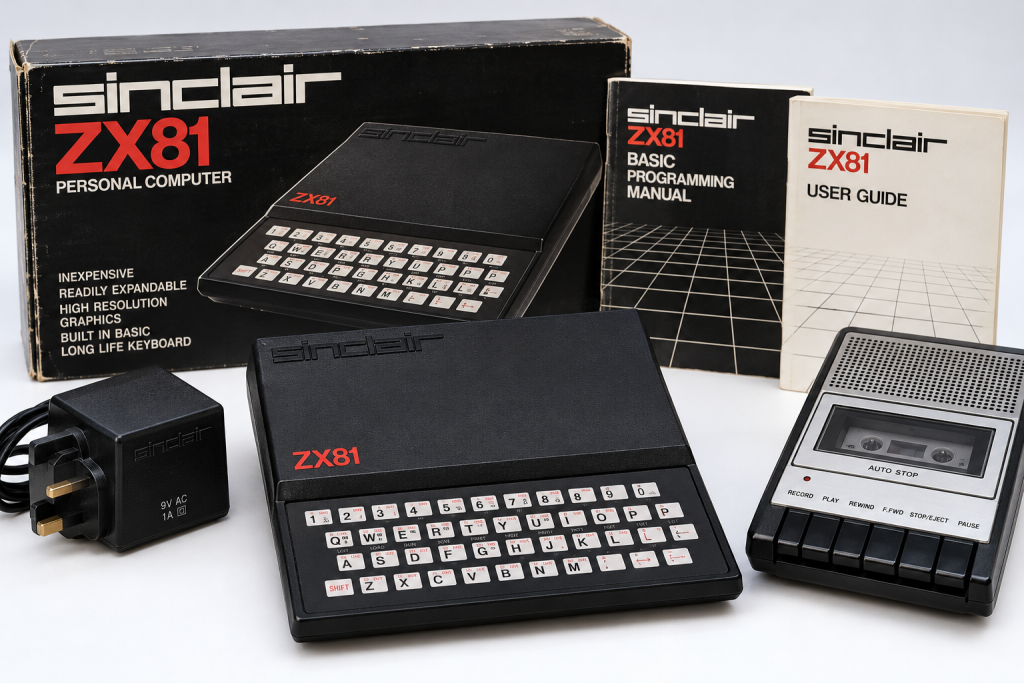
Sinclair Research launched the ZX81 in the United Kingdom on 5 March 1981. Designed under the direction of Sir Clive Sinclair, it was the successor to the ZX80 and was intended to make computing more affordable.
The price was a major part of the attraction. You could buy the ZX81 as a kit for £49.95 or pay £69.95 for an assembled machine. The kit option appealed to people who were comfortable building their own electronics, while the ready-built version meant you could get started without a soldering iron and a prayer. Which option did my 12-year-old self convince his parents to buy? The ready-built machine, of course. I don’t think I had even touched a soldering iron at that point.
The ZX81 was also a remarkably compact piece of engineering. Its distinctive black plastic case, designed by Rick Dickinson, contained a single circuit board and just four integrated circuits. That was a considerable reduction in component count compared with many contemporary computers.
It connected to an ordinary television for its display and used a standard cassette recorder to save and load programs. You didn’t need a dedicated monitor, floppy disk drive or a room full of expensive equipment. A television, a cassette recorder and a suitable power supply could get you started.
It was an important step towards making computing accessible to people who might never previously have considered owning a computer.
Under the bonnet: the technical specifications
The ZX81 was an eight-bit computer built around the Zilog Z80A family of processors. It wasn’t designed to compete with expensive business machines. Its success came from making careful use of a small amount of hardware.
| Specification | Sinclair ZX81 |
|---|---|
| Launch | March 1981 |
| Processor | Zilog Z80A-compatible, approximately 3.25 MHz |
| Standard RAM | 1 KB |
| ROM | 8 KB |
| Programming language | Sinclair BASIC |
| Display | Monochrome output to a television |
| Text display | Up to 32 characters across, 24 character rows in the display format |
| Graphics | Simple monochrome block graphics |
| Sound | No built-in sound generator |
| Storage | External cassette recorder |
| Keyboard | 40-key membrane keyboard |
| Expansion | Rear expansion connector, including RAM packs |
| UK launch price | £49.95 kit; £69.95 assembled |
The key figures tell us a lot about the machine. Eight kilobytes of ROM held the built-in software, including the BASIC interpreter. The 1 KB of RAM was the working area used for programs, variables, system information and the display.
That last point is important. The computer couldn’t dedicate all its memory to your program because it needed some of it simply to operate. If you wanted to write anything more ambitious than a tiny demonstration, every byte mattered.
Modern computers have trained us to think of memory in gigabytes. The ZX81 forced you to think in individual bytes and kilobytes. You quickly learned that a long variable name, an unnecessarily complicated routine or an elaborate display could consume resources you simply didn’t have.
It was a very different way of programming.
The magic of the four chips
One of the ZX81’s most interesting features was its use of a custom chip known as an uncommitted logic array, or ULA. Produced by Ferranti, this chip replaced a collection of separate logic components that would otherwise have increased the cost and complexity of the machine.
The result was a computer built from just four integrated circuits: the processor, ROM, RAM and ULA.
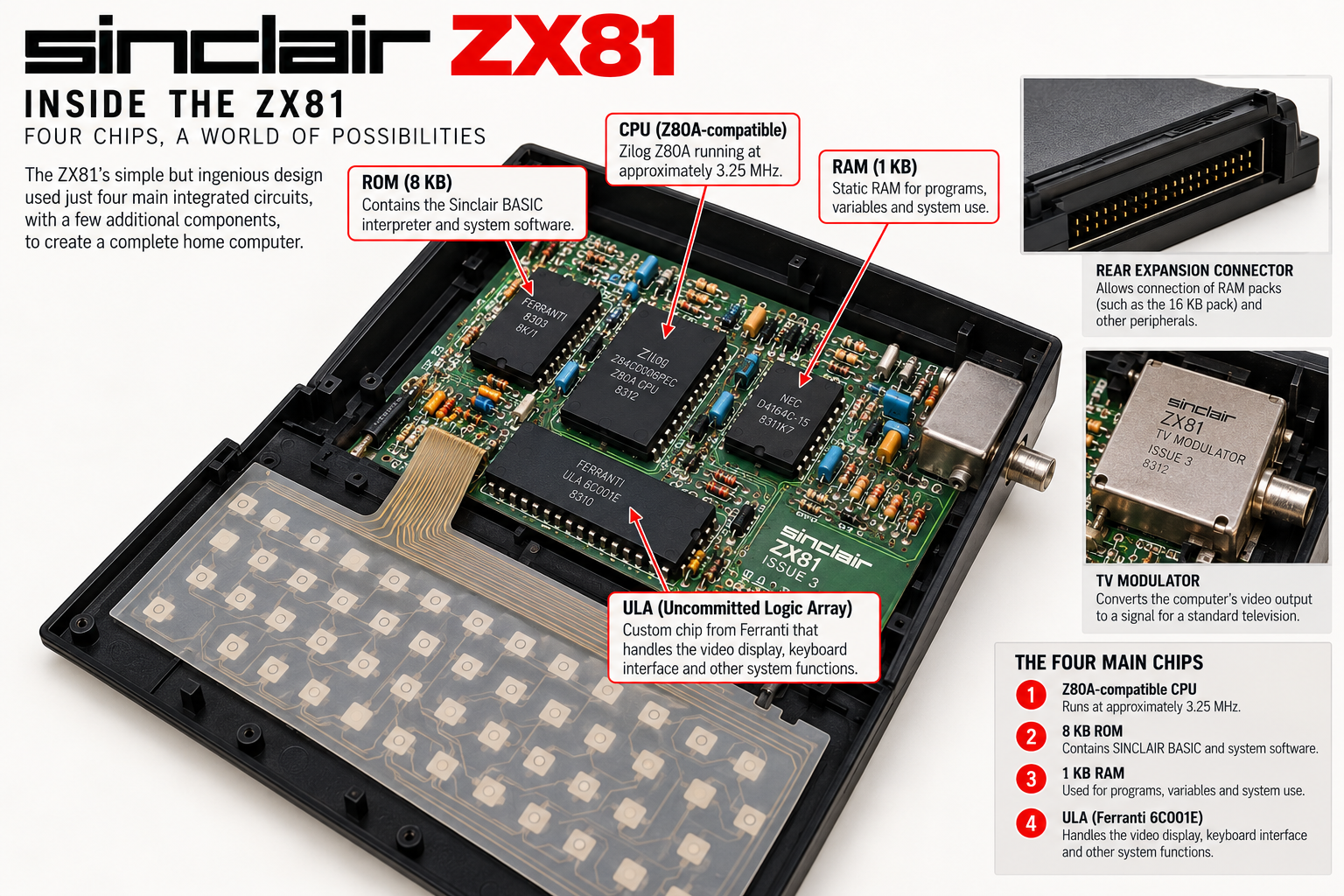
This wasn’t simply a clever engineering curiosity. Reducing the component count helped Sinclair keep the price down, which was central to the ZX81’s appeal.
There were compromises, of course. The processor also had to help generate the television display. The machine therefore couldn’t simply calculate at full speed while continuously refreshing the screen. Sinclair’s solution was to provide two operating modes, SLOW and FAST.
In SLOW mode, the ZX81 maintained the display while carrying out calculations. In FAST mode, it could devote more time to processing, but the picture disappeared while it worked.
Think about that for a moment. If you wanted the computer to calculate something quickly, you could effectively tell it to stop bothering with the picture until it had finished.
That’s resource management with absolutely no pretence.
One kilobyte: a very small box indeed
The ZX81’s standard 1 KB of RAM was both its defining limitation and one of its most interesting challenges.
A kilobyte is 1,024 bytes. A single character generally requires one byte in the computer’s stored text representation, although the full memory cost of a program is more complicated than that. The machine also needed space for variables, program structure, system data and the screen display.
Consequently, a program that looked tiny to a human could occupy a significant proportion of the available memory.
You couldn’t afford to be wasteful. Efficient programming wasn’t merely a mark of skill; it was often the difference between a program that worked and one that ran out of room.
The ZX81 did, however, offer a way forward. A RAM pack could be connected to the rear expansion port to increase the available memory. Sinclair’s official 16 KB RAM pack was a particularly useful accessory, opening the door to larger programs and more ambitious projects.
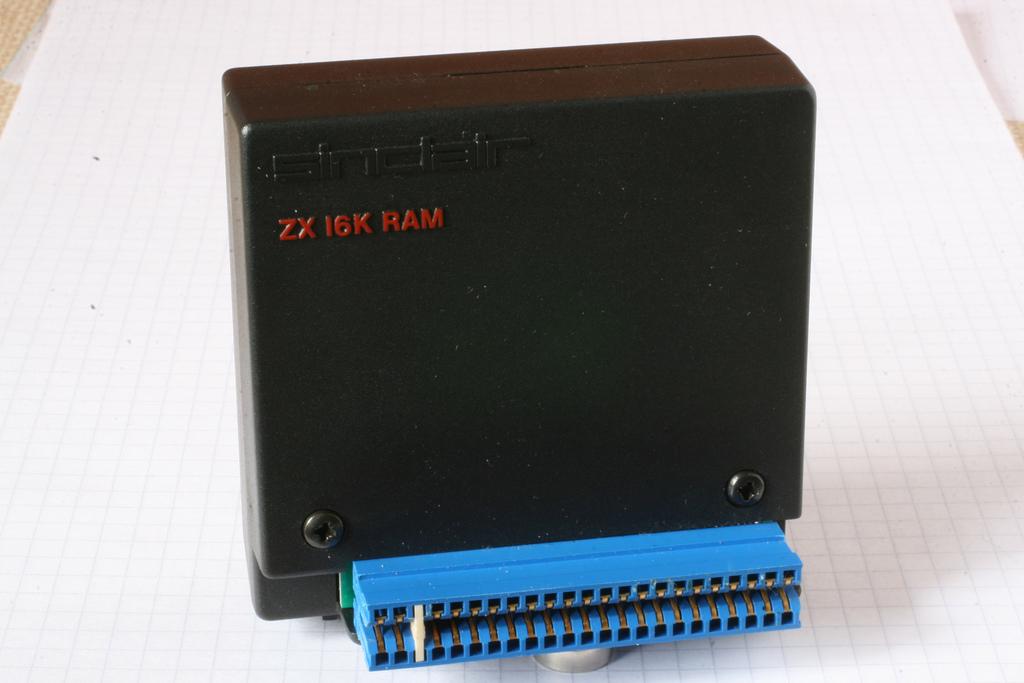
The machine’s expansion capability was one of its attractions. It allowed owners to begin with a relatively inexpensive computer and add more memory as their ambitions grew.
Of course, expansion brought its own complications. The connector was not particularly secure, and the additional pack could be disturbed by an accidental nudge. The resulting computer crash could leave you wondering whether your carefully written program had survived.
There is a reason that the phrase RAM pack wobble became part of the folklore surrounding Sinclair computers.
Programming: where the real fun began
The ZX81 came with Sinclair BASIC built into its ROM. You didn’t need to buy a separate programming language or load an operating system from a disk. Switch on, wait for the machine to initialise, and you could begin entering commands.
BASIC was designed to be approachable. You could print text, perform calculations, use variables, build loops and make decisions based on conditions. Even a relatively inexperienced programmer could create something that responded to input and produced a result.
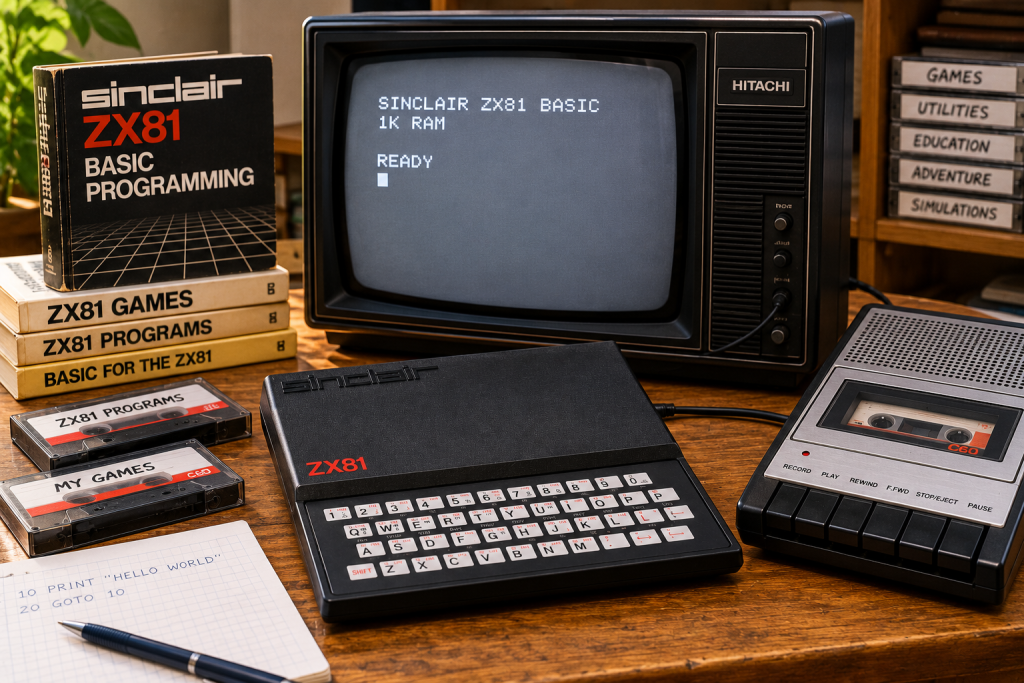
A tiny program could look like this:
10 PRINT "HELLO GRAMEPA"
20 GOTO 10
Run it, and the computer would repeatedly display the message. It wasn’t going to win any awards for sophisticated software engineering, but it demonstrated something important: you had told a computer what to do, and it was doing it.
From there, you could explore arithmetic, generate patterns, build simple games, simulate dice, calculate compound interest or experiment with mathematical problems.
The ZX81 also had an unusual keyboard. Rather than treating every key as an ordinary character, it used a system of keyword entry. BASIC commands could be entered using dedicated key combinations, meaning a single keypress could insert an entire command.
This saved typing and helped keep the keyboard compact. It also meant that learning to use the machine involved learning its particular keyboard conventions.
You weren’t simply typing English into a computer. You were learning to communicate in a language the machine understood.
For many people, that was the beginning of a much longer relationship with programming.
Graphics without colour
The ZX81 had no colour graphics and no dedicated graphics processor. Its display was monochrome, generated through the television interface, and its graphical capabilities were limited compared with the machines that followed.
But limited doesn’t mean useless.
The machine could display text and use simple block graphics to create rudimentary pictures and game displays. By combining characters, symbols and graphic blocks, programmers could create movement, obstacles, targets and basic interactive environments.
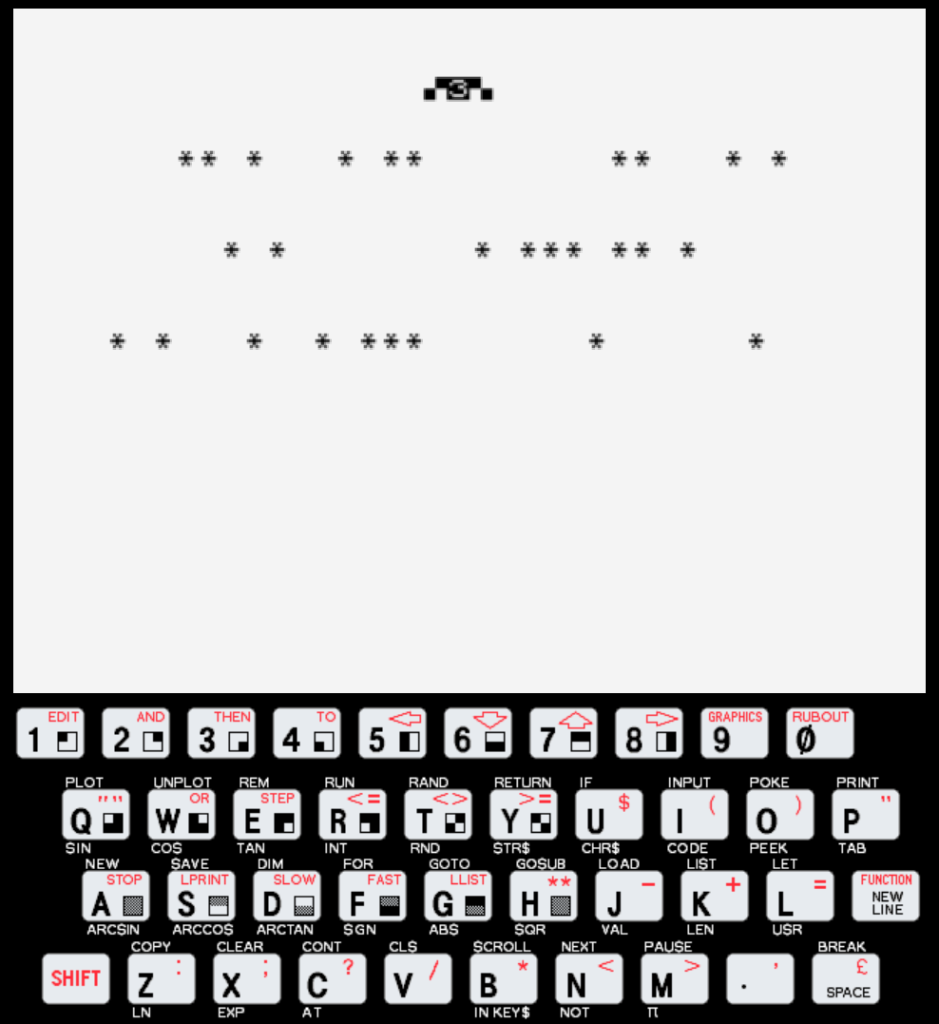

The available graphical resolution was crude, but clever programming could achieve surprisingly entertaining results.
This was the period when imagination did a lot of the work that modern graphics hardware handles automatically.
A character might be represented by a handful of blocks. A maze could be assembled from simple symbols. A game could be compelling even if its visuals looked as though someone had drawn them on a calculator after a particularly long night.
The important thing was that you could make it yourself.
Saving programs: the cassette shuffle
The ZX81 didn’t have a disk drive. Programs were stored on ordinary audio cassettes, using the cassette recorder connected to the computer.
Saving a program was straightforward in principle. You instructed the machine to save, started the recorder and let the data be written to tape. To load it again, you reversed the process and hoped the computer could read the recording correctly.
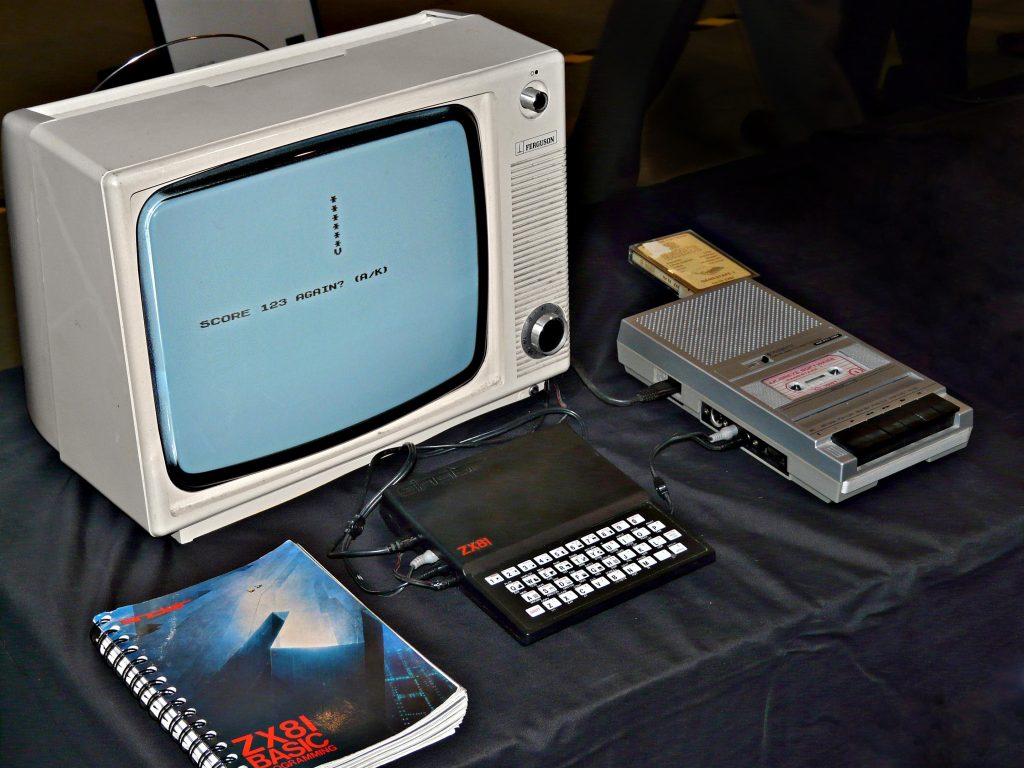

In practice, cassette storage introduced its own collection of variables. Recording levels, tape condition, recorder compatibility and the general temperament of the equipment could all affect whether a program loaded successfully.
There was no convenient folder full of files, no automatic cloud backup and no helpful progress bar reassuring you that everything was going well.
You listened to the noises coming from the cassette recorder and waited.
When the program loaded successfully, it felt like a small victory. When it didn’t, you could find yourself repeating the process, adjusting the volume and wondering whether the tape itself had developed a personal grudge.
It was primitive by modern standards, but cassette storage was inexpensive and readily available. It helped make home computing affordable.
And it gave an entire generation a healthy respect for backups.
What about games?
The ZX81 was never a powerhouse gaming machine, but it provided an accessible way for people to experiment with interactive software.
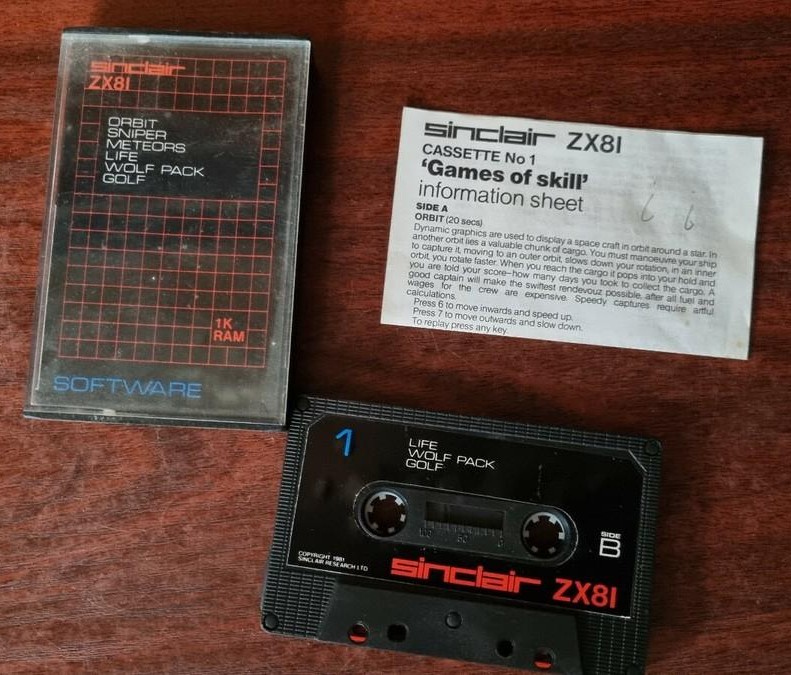
Games often relied on text, numbers and simple block graphics. You could build guessing games, simulations, board games, maze adventures and basic arcade-style challenges.
The limited memory meant that programmers had to be inventive. Every extra feature competed with the memory needed to make the game work. There was no room for enormous graphics libraries, elaborate soundtracks or sprawling worlds.
Yet the ZX81’s simplicity made it an excellent learning platform. It was possible to understand how a small game worked because the entire program could be relatively compact.
For an aspiring programmer, that was enormously valuable. You could examine a listing, type it in, see what happened, change a few lines and discover how those changes affected the result.
The computer wasn’t just something you played games on. It was something that encouraged you to make games of your own.
The ZX80 connection
The ZX81 makes even more sense when viewed alongside the Sinclair ZX80.
The ZX80 had already demonstrated that a home computer could be sold at a remarkably low price. The ZX81 refined that idea, incorporating an improved 8 KB BASIC ROM, floating-point mathematical support, a SLOW display mode and other enhancements.
The ZX81 retained the same basic philosophy: keep the hardware simple, use custom engineering to reduce costs, and let the owner expand the system when necessary.
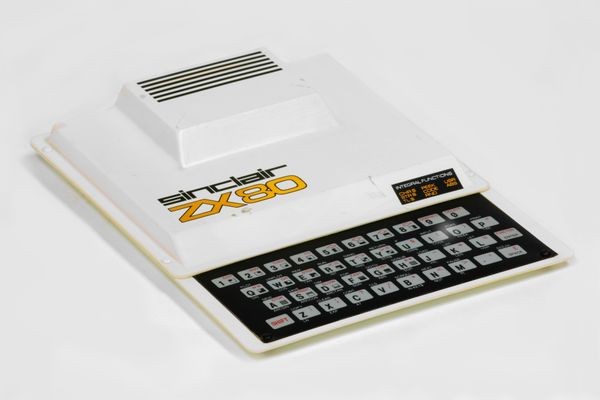
I had wanted the ZX80, but the arrival of the ZX81 gave me a more capable successor to aim for. That pattern would become familiar throughout the home-computer boom. A machine would capture your imagination, and before long, a newer model would arrive promising to do more for your money.
The ZX81 was an early example of that rapid cycle of technological improvement.
The legacy: why the ZX81 mattered
The Sinclair ZX81 sold in large numbers and became an important part of Britain’s early home-computer boom. Its low price brought computing within reach of people who would otherwise have been unable to afford a machine of their own.
It also helped establish a culture of experimentation. Owners learned BASIC, wrote small programs, shared listings, bought expansion hardware and discovered that computers were not mysterious black boxes reserved for large organisations.
They were machines that ordinary people could learn to control.
The ZX81 wasn’t powerful, and it wasn’t particularly forgiving. Its keyboard required patience, its memory was tiny, its display was basic and its storage depended on cassette equipment. But it offered something more important than impressive specifications: an accessible starting point.
For some owners, it was an introduction to programming. For others, it was the beginning of a lifelong interest in technology. For many, it was the first step towards the much more capable home computers that followed.
And that is why it deserves a place at the beginning of these chronicles.
Gramepa’s verdict
The Sinclair ZX81 was not a machine you bought because you wanted beautiful graphics, orchestral soundtracks or a vast library of sophisticated games. You bought it because you wanted to explore computing, and it gave you the opportunity to do exactly that without spending a fortune.
Its limitations were obvious, but they were also part of the education. You learned to think carefully, write economical programs and work within the resources available. You learned that a computer did exactly what you told it to do, which wasn’t always what you actually wanted it to do.
That lesson hasn’t changed.
The ZX81 helped make home computing accessible, and it arrived at just the right time. It was a small machine with a big idea: give people a computer they could afford, and let them discover what they could do with it.
For Gramepa, it marks the beginning of a journey that would travel through the Spectrum era, the 16-bit revolution and all the way to modern gaming and technology.
Not bad for a little black box with one kilobyte of RAM.
Fancy experimenting with some of the games and programming of a ZX81? Here is a great site where you can emulate using a ZX81 and experience the whole thing in a stress free environment that doesn’t involve typing in piles of text and then experiencing a crash:
https://www.zx81stuff.org.uk/index.html
Next in the chronicles: the machines that helped turn home computing into a full-blown obsession.